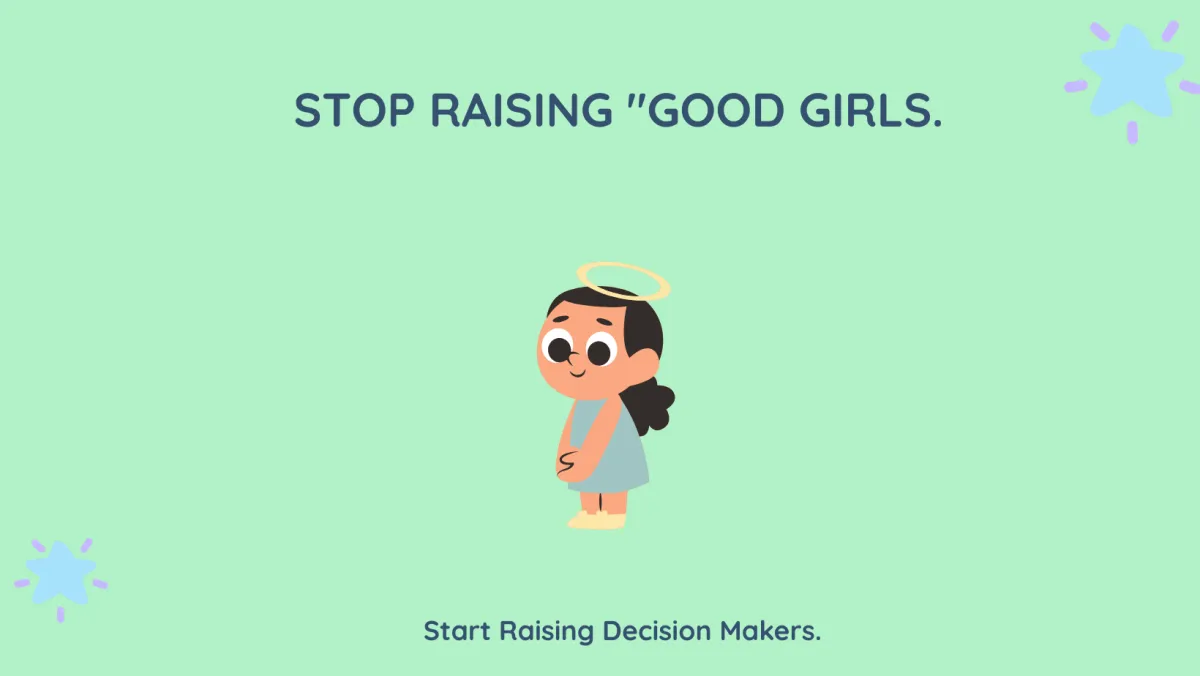
Beyond "Good Job": Why I’m Obsessed with My Daughter’s Identity
As a former career strategist, I spent years helping high-level professionals "rebrand" themselves. We would work on how they perceived their own value so they could walk into boardrooms with authority and negotiate for the 54% raises they deserved.
But since becoming a mom, I’ve realized that "branding" starts much earlier than the first resume. It starts with the labels we give our children before they can even speak.
One of the most intentional things I do with my daughter (who is currently just under two) is focus on her identity, not just her actions. I am incredibly protective of how she identifies herself, because I never want her to feel limited by a fleeting moment of frustration.
The Action vs. The Identity
We’ve all seen the scenario: a toddler knocks over a tower of blocks or spills their milk, and the immediate adult reaction is "Bad girl!" or "Why are you so messy?"
In our house, we flip the switch.
If the blocks fall, I tell her: "It’s okay! We just try again. You are capable."
The Science of the "Internal Narrative"
The Power of Nouns: Research published in Child Development found that using "identity-focused" language (e.g., calling a child a "helper" rather than asking them "to help") increased the child's persistence and desire to contribute by 22%. Nouns create a sense of self; verbs just describe a moment.
Source: Bryan, C. J., et al. (2014).
The "Growth Mindset" Data: According to Stanford’s Dr. Carol Dweck, children praised for their process or identity (being a resilient learner) rather than their intelligence are 3x more likely to choose challenging tasks later in life. They view challenges as a way to grow their identity, not a threat to it.
Source: Dweck, C. (2006). Mindset: The New Psychology of Success.
Separating the Outcome from the Self
I want my daughter to internalize two truths:
The action might be "messy," but she is still a kind person.
The outcome might be a "fail," but she is not a "failure."
I call her a Kind Princess. I call her Silly. I call her Capable. I am feeding her the identity I want her to carry into adulthood, so that when she eventually hits a wall in the real world, her internal voice says, "I am a problem-solver," not "I’m not good enough."
Why Affirmations Are "Identity Blueprints"
This is exactly why I wrote Big Dreams, Tiny Steps in an affirmation style.
When you read a typical storybook, you’re an observer. But when you read an affirmation book, you are speaking directly to your child’s identity. You are saying:
"You are kind."
"You are capable."
"You can do hard things."
By using the word "You," we are helping our children "onboard" these traits into their sense of self. We are building a foundation where they don’t just do brave things...they are brave people.
Habits for the Long Run
I’m building this habit for myself just as much as for her. It takes effort to pause and separate the child from the mess. But every time I say, "The blocks fell, let's try again," I am teaching her that her worth is not tied to a perfect result.
The Neuroplasticity Fact: The first five years are the most critical for "synaptic pruning." During this window, the brain is creating 1 million new neural connections every second. The language we use literally carves the "pathways of least resistance" in their minds. If we carve a pathway of "I am capable," that becomes her default setting for life.
Source: Harvard University Center on the Developing Child (2017).
We aren't just raising children; we are framing the way they will talk to themselves for the next 80 years.
Executive Summary for Parents:
Shift from Verbs to Nouns: Instead of "Thanks for helping," try "You are such a helper."
Narrate the Effort: When they fail, label the persistence ("You are a person who tries again") rather than the mistake.
Protect the Identity: Never let a "messy" moment define a "messy" child.
We have 1 million chances every second to shape how our children see themselves. If you’re ready to move beyond "Good Job" and start raising a self-led, assertive leader, Big Dreams, Tiny Steps is your daily blueprint.


